


 English
 عربى
عربى Français
 Español
 Português
Cable tray straight adopts a coverless U-shaped straight section design, and the overall structure is simple and practical. Its core structure is a U-shaped trough, and the edges on both sides are des...
READ MORELNG Cable Tray Solutions: Corrosion Resistance, Load Specs & Standards
An LNG facility on a coastal industrial site is not a forgiving environment for cable trays. Salt-laden air from the sea, washdown chemicals, hydrocarbon condensate and vibration from large rotating equipment all hit the tray system at the same time. The trays that support process cables near the compressor deck are exposed to daily corrosion, while the trays at the jetty loading area may see wind-blown spray and occasional cryogenic condensate. In this setting, the decision about cable tray solutions for LNG facilities is not a routine purchase. It is a specification exercise that determines whether the electrical assets remain protected, grounded and inspectable for the design life of the plant. The engineering conclusion is simple: choose the tray system by the process area, not by a single material category, and require a manufacturer that can deliver the full set of fittings needed to keep the cable path continuous.
LNG facility environments create three distinct cable tray risks
The design of the cable tray begins with the three risks that dominate the process area. The first is corrosion. LNG plants are often located at coastal sites where airborne salt and humidity attack carbon steel and aluminum. In process areas, acid gas and chemical cleaning agents can also gather on the tray surface. The second risk is fire and explosion. A tray that is not reliably grounded can create a spark path; a tray that melts in a fire can drop cables and leave critical controls without power. The third risk is mechanical loading. The weight of large power cables, the thermal expansion of long runs, and the vibration from pumps and compressors must all be absorbed by the tray structure and its connection points.
| Risk | Performance required from the cable tray | Typical material path |
|---|---|---|
| Coastal salt fog and chemical exposure | Corrosion resistance that does not depend on touch-up paint | FRP or hot-dip galvanized steel |
| Flammable atmosphere and fire zone | Ground continuity and heat resistance | Steel with a continuous grounding path; FRP with a separate ground conductor |
| Cable weight, vibration and thermal movement | High load rating and secure fittings | Heavy-duty cable ladder with locked joints |
This is why a single product classification is misleading. A tray that works well for a clean indoor substation may fail in a coastal LNG loading area within two years. The three risks must be addressed together, and the selection process should start with a plant area drawing, not with a product catalog.
Material selection: FRP vs steel for LNG process areas
For the greatest number of LNG process areas, hot-dip galvanized steel cable trays still provide the best balance of cost and performance. The zinc coating protects the steel against salt fog, and the mechanical strength of a steel tray allows long spans between supports. However, in locations where the tray is washed frequently, where chemical spillage is likely, or where galvanized coating can be damaged during installation, a Fiberglass Reinforced Polymer (FRP) tray offers a more reliable lifetime. FRP is unaffected by the same corrosive media that slowly removes zinc, and it does not require painting or periodic maintenance. Because FRP is non-conductive, the grounding system must be designed separately with a continuous ground conductor. This is a small engineering change for a long-term maintenance gain.
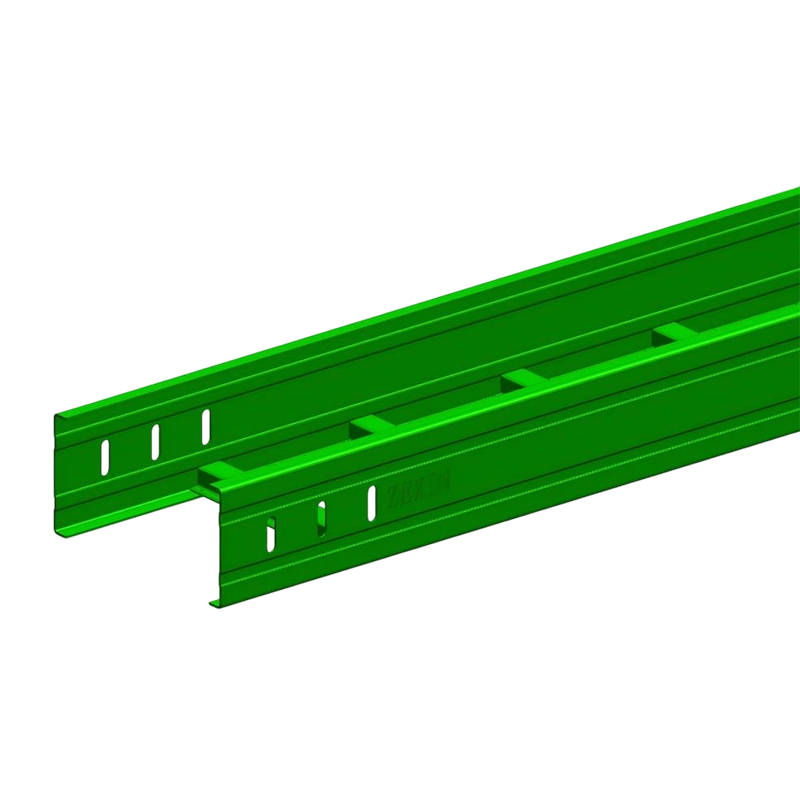 Fiberglass Reinforced Polymer Straight Cable Tray SectionThis FRP straight section resists corrosion where galvanized steel fails, reducing maintenance in washdown or chemical spill areas. Its non-conductive body requires a separate grounding path.View Product →
Zexin manufactures FRP straight sections with a matching range of horizontal elbows, tees, crosses and reducers, which means the entire cable path can remain in the same material system. Used in the right locations, an FRP tray will keep its structural integrity and surface finish for decades without a single coat of paint, which directly lowers the maintenance budget of the plant.
Cable ladder vs solid-bottom trays in LNG compressor rooms
LNG compressor rooms are a different kind of challenge. High voltage cables that feed the main compressors generate heat. A solid-bottom tray can trap that heat and create an increase in cable temperature. A cable ladder, on the other hand, has an open structure that allows air to move naturally around the cables, which is one reason why cable ladder is a standard choice for high-current power runs. Cable ladder also offers lower overall weight per meter than a solid-bottom tray because the rungs are spaced, yet the mechanical strength remains high enough to support the short spans used in compressor rooms.
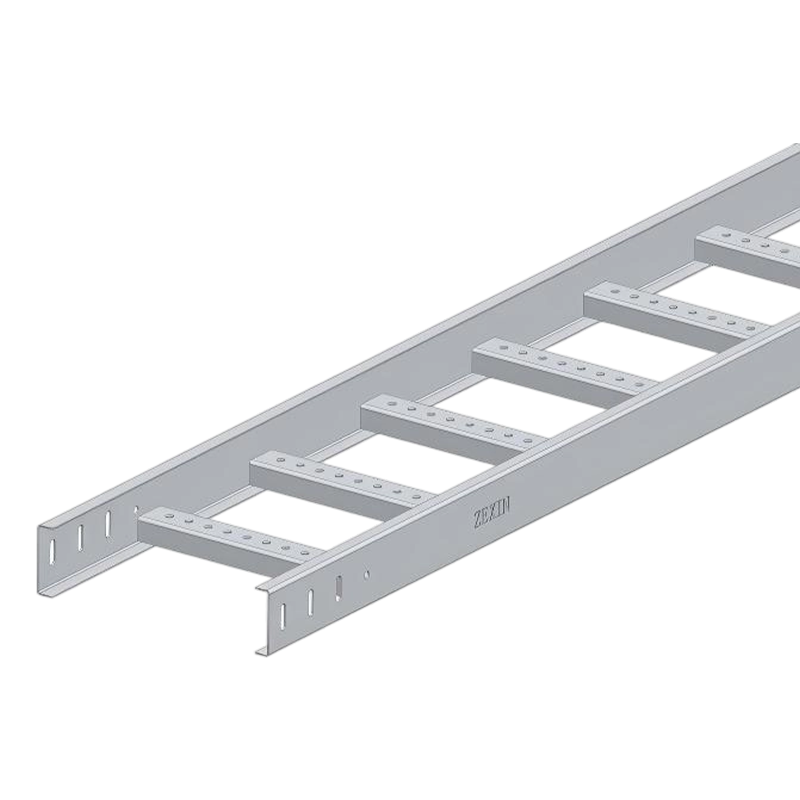 Open Ladder Type Straight Cable Tray for Power RunsWith an open structure that allows natural ventilation, this ladder tray supports heavy cable loads up to 200 kg/m, making it ideal for high-current compressor room installations.View Product →
Zexin produces cable ladder straight sections, horizontal 90-degree elbows, tees, crosses and reducers so that the tray route can match the compressor layout without improvisation on site. Where the cable route passes through an area with light dust or moisture, a perforated tray or a trunking section can be used as a cover, while the rest of the circuit remains in the open ladder.
Marine, jetty, and offshore load-outs need marine-grade trays
The jetty area of an LNG receiving terminal is functionally a marine environment. The trays that run along the loading arms and the berth approach may be affected by three additional factors: saltwater splash, the need for galvanic compatibility with the surrounding steel structure, and strict rules about the integrity of electrical supports in a marine atmosphere. A marine-grade cable tray is normally fabricated with a tighter zinc layer or in a stainless material with a marine finish, and the straight sections are available in single and double configurations to support different cable groups. These trays are often chosen by the same classification logic that governs shipyards, because the site of the loading area is in many ways a shipyard.
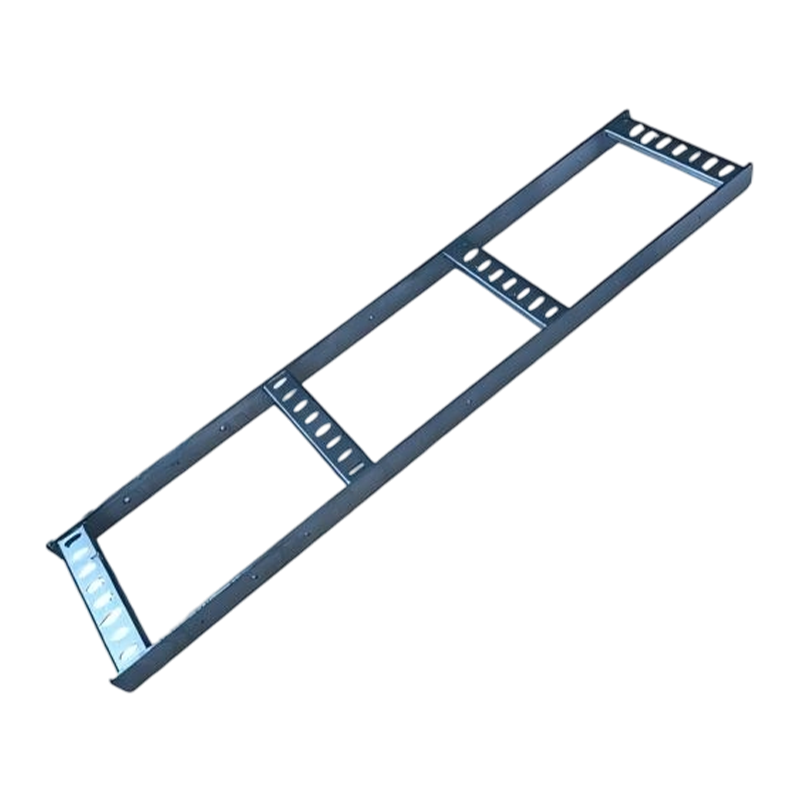 Marine Grade Single Straight Cable Tray for JettiesDesigned for saltwater splash and vibration, this single-side open tray provides secure cable support on ship-like structures. Its closed bottom and fixing holes ensure stability.View Product →
Zexin offers both single and double straight cable trays in its marine cable tray range, which allows the contractor to separate low-voltage instrumentation and high-voltage power cables in the same route. Selecting a marine-grade tray for a jetty is not an over-specification. It is a way to reduce spares inventory and prevent the most common failure of cable trays in coastal LNG terminals: corrosion at the connection points.
Load, span, and installation details that decide the final cost
After material selection, the most important specification points are load rating, support spacing, and fittings. IEC 61537 provides a common framework for cable tray load classes, while NEMA VE-1 is often used in the US market. A heavy-duty tray must pass a minimum load test at the working span, and the tray width must be selected so that the total cable weight does not exceed the rated load. The connection between the straight section and the fittings must be able to withstand the vibration that comes from the process equipment. The plant's grounding philosophy also decides how much attention the tray installation gets. Metal trays need continuous electrical continuity. Joints between sections must either be mechanically bonded or connected with an intentional jumper, so that the whole tray system can work as part of the ground grid.
Many cost overruns in LNG projects are not created by the tray materials themselves. They are created by missing fittings. When the installation team does not have the correct vertical bend, the reducer, or the tee, the contractor spends hours fabricating improvised pieces at the site. A manufacturer that can supply the complete set of components for the whole route eliminates that risk, and this is why the quality of the product range matters more than the unit price.
How a project-experienced supply partner reduces procurement risk
An LNG terminal is not a place for suppliers that cannot provide documentation, samples and factory support. The buyer should evaluate the supplier from three angles: the relevance of the product range, the ability to deliver complete systems, and the project experience of the company. Zexin covers six main tray categories, including cable ladder, cable trunking, FRP, marine, perforated and wire mesh trays, which means a single supplier can provide the whole system. The company states that it can support customers from design to installation and offers OEM/ODM manufacturing capability, which is valuable when an EPC contractor has a specific drawing specification.
The project list at the company's website includes data centers, semiconductor fabs, pharmaceutical plants and solar installations. That breadth matters because the manufacturing experience gained in these projects translates directly into the discipline required by an LNG facility. A cable tray that has been produced for a cleanroom with strict dimensional control will also have precise connections in a harsh environment. Review the completed project portfolio to verify the supplier's track record.
For a facility-specific specification, the safest route is to contact Zexin directly with the plant area drawings and the cable schedule. A complete cable tray system with the right material for each process area will keep the LNG plant running, keep the grounding path continuous, and keep the maintenance budget under control.
Related Products
-
-
Cable ladder straight adopts a ladder-type main beam structure with crossbar support. This structure is derived from the mechanical principle of traditional I-beams. The main beam bears the weight of ...
READ MORE -
Conservation cable tray straight is made of high-quality cold-rolled steel and aluminum alloy as the main materials. Cold-rolled steel provides a solid support foundation for the bridge with its good ...
READ MORE -
The core design of the cable ladder reducer is a trapezoidal gradual transition structure. The structure adopts a ladder-type bridge beam body, and the bottom is supported by a crossbar to ensure the ...
READ MORE
Related News
-
1.Choosing the Right Cable Trunking Type Cable trunking systems are solutions used to protect cables and ensure their sa...
READ MORE -
Introduction to Wire Mesh Cable Trays What are Wire Mesh Cable Trays? A wire mesh cable tray, also called a wire cable t...
READ MORE -
The Role of Perforated Cable Tray in Solar Power System Wiring Understanding Perforated Cable Trays and Their Functional...
READ MORE -
Cable Trunking: A Key Component in Reducing Electrical Hazards Electrical installations are an essential part of any mod...
READ MORE
Customized service
Customized service
Customized service
Customized service

Telephone consultation
The consultation form is here.
+86-182-6255-8899Working hours 8:00~17:00
-
Address
No. 67 Yongsheng Line, Yangzhong City, Jiangsu Province, China
XIN ZEXIN ELECTRIC PTE LTD
Email: sales@xinzexin.com.sg
Contact: +65 6214 6888
Address: 1 Sunview Road, #03-22 Eco-Tech@Sunview, Singapore 627615 -
E-mail
sales@zexinelectric.com
-
Friendship Link
www.zexin.com
-
Social Media Account
We welcome you to visit and inspect our company on site. Looking forward to becoming your partner.
CONTENTS
Copyright 2025 JIANGSU ZEXIN ELECTRIC TECHNOLOGY CO.,LTD. All Rights Reserved
