


 English
 عربى
عربى Français
 Español
 Português
The FRP cable tray reducer adopts a gradual transition design, and the transition slope is strictly controlled within 15°, ensuring a smooth transition of the bridge width from 100mm to 500mm. Compare...
READ MOREfire stopping cable tray: Applications, Selection Criteria, and Practical Guidance
It is the moment every project manager hopes to avoid. A fire safety engineer walks the cable containment route in a newly built data centre and stops where a fully loaded cable tray disappears into a fire-rated wall. Around the tray there is still an open gap. The cables are in, the tray is fixed, but the penetration has not been fire stopped. The inspection stops, the handover slips, and an overnight fix turns into a two-week coordination exercise.
That scenario repeats on industrial, pharmaceutical and infrastructure projects around the world. Fire stopping cable tray penetrations is not an afterthought; it is a tested engineering requirement. Done correctly, it restores the fire resistance of the wall or floor that the cable containment system has cut through. Done late or done poorly, it turns a compliant installation into a liability.
This article explains what fire stopping for cable trays actually involves, why unprotected penetrations fail so quickly in a fire, which materials and tray types make sealing easier, and what to check before the inspector arrives.
What Fire Stopping for Cable Trays Really Means
A fire-rated wall or floor is designed to contain fire, heat and smoke for a specified period, typically 60 to 180 minutes. The moment a cable tray passes through that barrier, the wall is no longer continuous. The metal tray conducts heat, the cable bundle carries combustible material, and the annular gap around the penetration lets smoke and hot gases travel from one compartment to another.
Fire stopping is the process of sealing that opening with products and installation methods tested as a complete assembly. An intumescent pillow, a wrap strip or a sealant is not enough on its own. What matters is the whole system: the tray profile, the cable fill, the gap width, the firestop material and the way they work together. The seal must hold its position, expand under heat and stay in place long enough to preserve the barrier's rating.
The conclusion is straightforward: fire stopping is what makes the penetration as resistant to fire as the wall around it. Nothing less than a tested and correctly installed system should be accepted where life safety matters.
Why Cable Tray Penetrations Are a Critical Weak Point
There are three reasons an unprotected cable tray opening fails quickly in a fire, and each one directly affects the firestop strategy.
- Steel conducts heat. A mild steel tray running through a wall transfers heat from the fire side to the unexposed side, and the temperature rise on the unexposed face can exceed the limit of the wall's rating.
- The open void around the tray acts like a chimney. In a vertical floor penetration, hot gases rise and draw fire upward; in a horizontal wall penetration, smoke and pressure push through the gap before the fire arrives.
- Cables are a fuel source. Even flame-retardant cables can ignite when bunched together under intense heat; the insulation melts, drips and spreads fire. A fully loaded tray is effectively a continuous fire path between compartments.
For these reasons, an unprotected penetration can compromise a two-hour rated wall in a matter of minutes. Firestop materials close the gap, insulate the metal and protect the cables long enough for the original barrier rating to hold.
How Firestop Systems Seal Cable Tray Openings
Most firestop systems for cable trays work on one of two mechanisms. Intumescent materials expand rapidly when heated, sometimes to many times their original volume, and press into the softened cable insulation to close the opening. Ablative materials char on the surface and form an insulating layer that slows heat transfer. A practical system often combines both approaches, depending on the opening size, the cable fill and the required rating.
The main application methods are not interchangeable. The right choice depends on the size of the penetration, how much re-entry you need later, and the type of tray installed.
| Method | How It Works | Best Suited For | Re-Entry For New Cables |
|---|---|---|---|
| Intumescent pillows | Blocks expand under heat and compress the cable bundle | Large openings and mixed cable sizes | Easy; pillows can be removed and replaced |
| Wrap strips | Intumescent sheets wrapped around the tray and cables | Perforated and ladder tray at wall penetrations | Must be removed and re-applied |
| Putty pads | Mouldable material that fills irregular gaps | Small voids around cables and supports | Moderate; can be reworked by hand |
| Sealant or caulk | Applied as a bead to close annular gaps | Small penetrations and neat finished joints | Difficult; requires cutting out and re-sealing |
One point is often missed: the tested installation detail includes the tray configuration. If the tray depth, width or rung spacing differs from the tested detail, the system's rating cannot be assumed. The geometry of the cable tray is part of the firestop specification.
How Cable Tray Type Affects Firestopping
The profile of the tray determines how easily a firestop system can close the opening. This is a purchasing consideration, not just a site detail, because the tray is ordered long before the firestop contractor arrives.
A perforated cable tray is the most firestop-friendly option for mixed cable loads. The perforations give the firestop material a mechanical key: wrap strips and putty lock through the holes and hold around each cable bundle instead of slipping over the surface. Contractors prefer perforated sections at wall and floor openings because the seal is quicker to install and inspect.
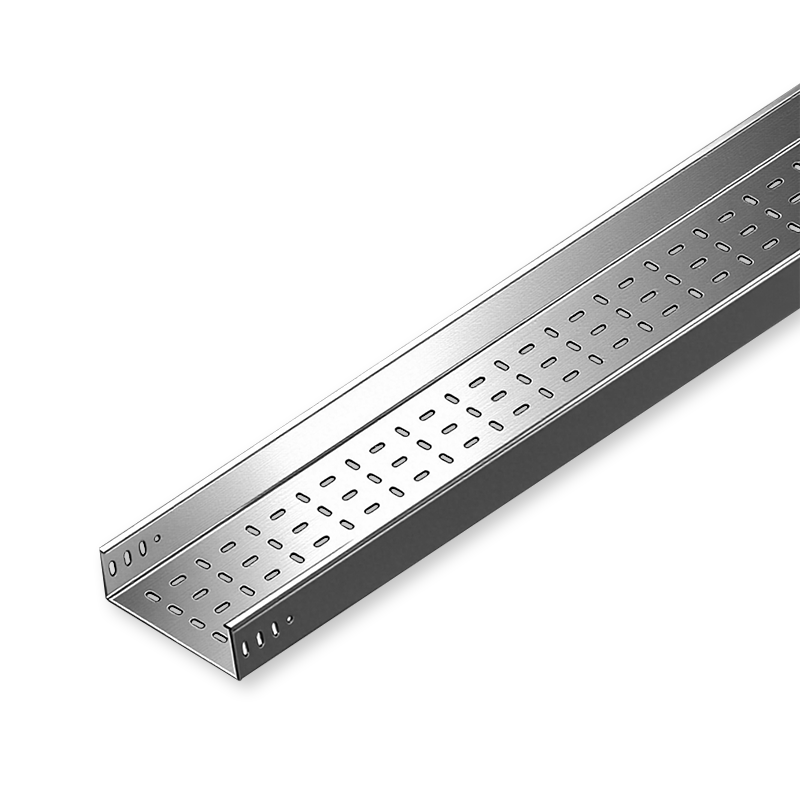 Perforated Cable Tray Straight with Ventilation HolesThis open perforated tray provides a mechanical key for firestop wrap strips and putty at wall openings, making seals quicker to install and easier to inspect in mixed cable runs.View Product →
Ladder tray is common in heavy industrial installations, but the large cut-outs between rungs mean wrap strips must bridge each opening carefully. Done correctly it works well, but it requires more skill and more material. On a project with many wall crossings, ladder tray at every penetration can slow the firestopping programme.
Fully enclosed cable trunking behaves differently. Because the outside profile is continuous, the firestop seal is applied around the outside of the trunking, and the trunking itself adds a layer of physical protection to the cables. This keeps the seal geometry simple and predictable, which reduces the number of variables an inspector has to check.
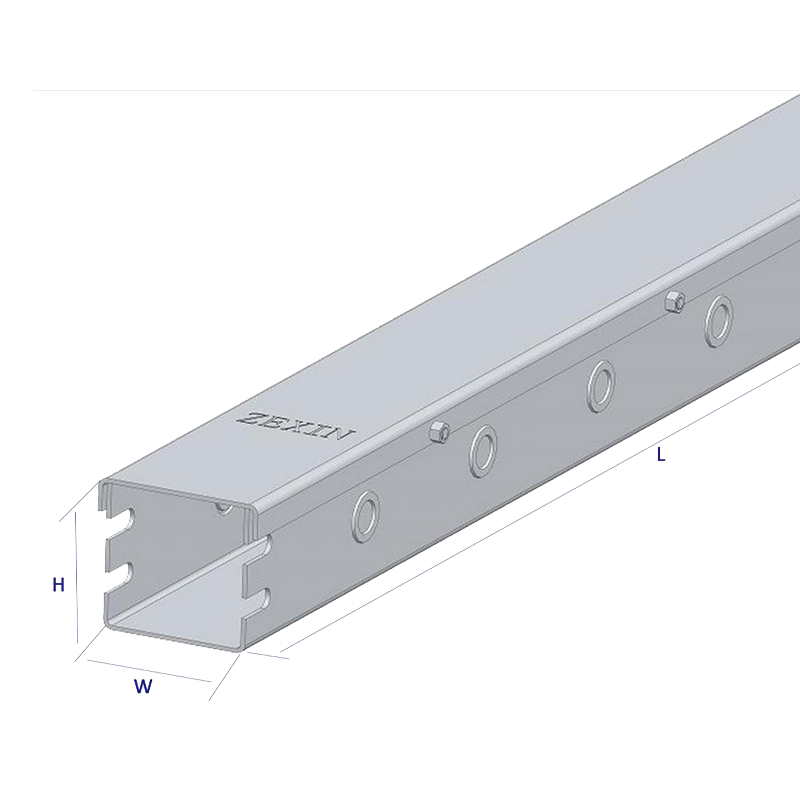 Coverless U-Shaped Cable Tray Straight SectionThe continuous exterior of this enclosed trunking keeps firestop seals simple and predictable, adding a protective layer around cables and reducing variables for inspectors at penetrations.View Product →
For corrosive or outdoor environments, FRP and marine tray options change the calculation as well. Glass-fibre reinforced tray does not conduct heat like steel, but the resin system affects fire behaviour, so the firestop manufacturer's test data must cover that material.
Installation Details That Decide Whether a Firestop Passes Inspection
Even with the right materials and the right tray type, poor installation causes most firestop failures during inspection. Four details decide whether the seal will pass.
First, support the tray close to the barrier on both sides. Firestop material seals the opening; it does not carry the weight of a loaded tray. A support within a few hundred millimetres keeps the tray stable and prevents movement from pulling the seal out of position.
Second, the gap geometry has to match the tested system. The firestop product data sheet specifies an annular space range, often between 10 and 50 mm depending on the product. If the wall opening is cut too wide, or the tray is installed off-centre, the gap can exceed the tested limit and the seal cannot be certified.
Third, the opening must be clean and dry before sealing. Dust prevents adhesion and creates a path for smoke; moisture affects the expansion behaviour of intumescent materials. A clean, dry surface is part of the firestop system, not a site preference.
Fourth, plan for future cable changes. Pillows and putty allow new cables to be added without destroying the seal; cured sealant does not. Where cable additions are likely, a re-enterable system saves significant cost later. Enclosed trunking layouts help at the containment level: the firestop stays on the outside of the enclosure while cable work happens inside, an example of how cable trunking improves safety and efficiency in electrical installations. Every opening still needs its own tested detail, but a well-planned enclosure means that detail is broken and rebuilt less often.
None of these details is visible once the wall is finished, which is why inspectors ask for photographic evidence. On larger projects, the firestop contractor labels each penetration with the system number and installation date, so the inspector can identify which tested design applies and who installed it.
Working With a Cable Tray Manufacturer That Understands Firestopping
Firestopping is often specified after the tray has been chosen, but installation becomes cheaper and simpler when tray selection accounts for firestop requirements from the start. A manufacturer that supplies straight sections, elbows, tees and reducers as matched components gives the project team predictable dimensions. Standard widths, tight tolerances and clean cut edges reduce the chance of an irregular annular gap at the penetration.
That consistency matters in sectors where fire containment is tightly controlled, such as semiconductor manufacturing, data centres and pharmaceutical plants. Zexin Electric, a cable tray manufacturer serving international projects from Jiangsu, China, has supplied containment into these environments, including the Micron Phase 2 semiconductor facility project in Singapore. These projects require every wall crossing to be coordinated before walls are closed, so tray dimensional quality is a compliance issue, not an aesthetic one.
For heavy process plants, a cable ladder system with strong rung welds and consistent load capacity lets engineers plan supports so trays arrive at each penetration straight and true. The closer the tray is to its intended position, the less the firestop contractor has to fight an awkward gap.
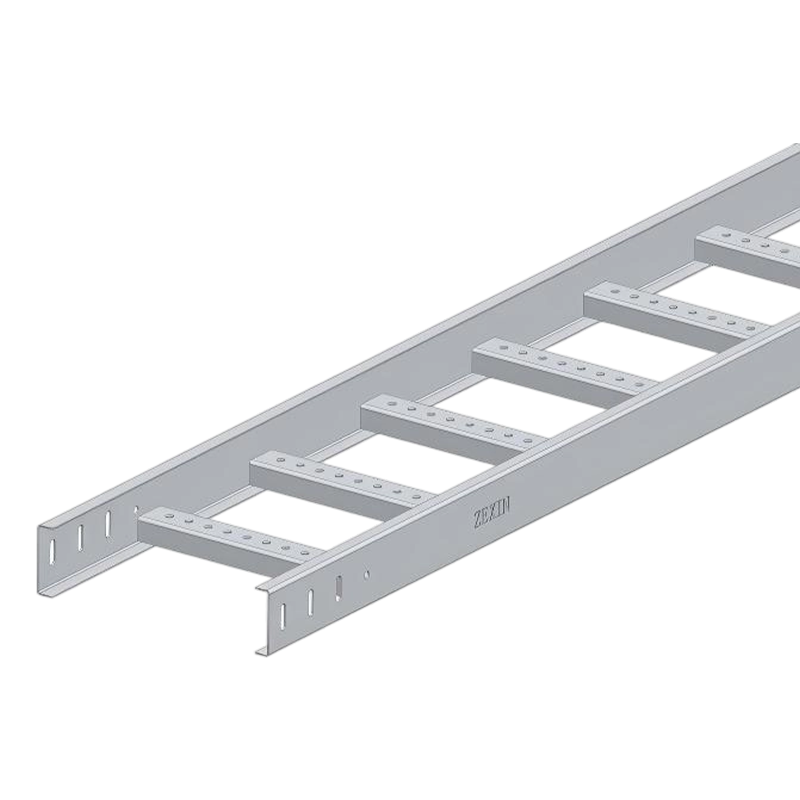 Heavy-Duty Cable Ladder Straight with Crossbar SupportWith a load capacity up to 200 kg/m and open construction for heat dissipation, this ladder tray ensures stable support at penetrations, easing accurate firestop installation.View Product →
Because Zexin works with customers in more than 100 countries and supports OEM and ODM orders, its engineering team can provide dimensioned drawings and installation guidance before production begins. When firestop details must be submitted for approval, having those documents early makes the whole approval process faster, and the final installation is much more likely to pass inspection on the first attempt.
Related Products
-
-
Wire mesh cable tray straight adopts an open grid design. The main body of the bridge is welded by steel wire. The mesh holes are evenly distributed and the opening rate is as high as 80%. The open st...
READ MORE -
FRP cable tray cross adopts a four-way equal strength connection design to ensure that the force in each direction is evenly distributed in complex wiring paths. This design effectively avoids the ris...
READ MORE -
FRP cable tray tee adopts scientific and reasonable structural design, supports equal-diameter and different-diameter branches, and meets the needs of different cable wiring solutions. Equal-diameter ...
READ MORE
Related News
-
1.Choosing the Right Cable Trunking Type Cable trunking systems are solutions used to protect cables and ensure their sa...
READ MORE -
Introduction to Wire Mesh Cable Trays What are Wire Mesh Cable Trays? A wire mesh cable tray, also called a wire cable t...
READ MORE -
The Role of Perforated Cable Tray in Solar Power System Wiring Understanding Perforated Cable Trays and Their Functional...
READ MORE -
Cable Trunking: A Key Component in Reducing Electrical Hazards Electrical installations are an essential part of any mod...
READ MORE
Customized service
Customized service
Customized service
Customized service

Telephone consultation
The consultation form is here.
+86-182-6255-8899Working hours 8:00~17:00
-
Address
No. 67 Yongsheng Line, Yangzhong City, Jiangsu Province, China
XIN ZEXIN ELECTRIC PTE LTD
Email: sales@xinzexin.com.sg
Contact: +65 6214 6888
Address: 1 Sunview Road, #03-22 Eco-Tech@Sunview, Singapore 627615 -
E-mail
sales@zexinelectric.com
-
Friendship Link
www.zexin.com
-
Social Media Account
We welcome you to visit and inspect our company on site. Looking forward to becoming your partner.
CONTENTS
Copyright 2025 JIANGSU ZEXIN ELECTRIC TECHNOLOGY CO.,LTD. All Rights Reserved
