


 English
 عربى
عربى Français
 Español
 Português
Conservation cable tray straight is made of high-quality cold-rolled steel and aluminum alloy as the main materials. Cold-rolled steel provides a solid support foundation for the bridge with its good ...
READ MORECable Tray for Data Centers: Selection Guide, Tray Types, and Installation Tips
For data centers, the cable tray is not an accessory. It is the one component that quietly decides whether your server room stays cool, whether your maintenance team can access a failed circuit without cutting cable ties, and whether your facility can add 50 more racks in year three. The right tray for these facilities is chosen by three constraints: continuous air circulation, predictable static load, and spare capacity for future runs. Everything else is aesthetics.
Why Data Centers Cannot Treat Tray Selection as a Simple Purchase
Industrial cable tray selection is usually a mechanical exercise: how many kilograms per meter, how many meters of span, which bending radius. In a data center, those parameters remain important, but two additional constraints dominate the decision: thermal management and accessibility. An underfloor tray with a 50% fill ratio and no ventilation can reduce the free air area enough to push cooling costs upward and raise rack inlet temperatures.
Power cables feeding the racks need a tray that can carry their weight and dissipate their heat. Fiber optic cables need a tray with a smooth bottom edge or a wire mesh structure that avoids sharp corners. Copper data cables need enough tray width to avoid excessive bend radius, which is a common cause of insertion loss in high-density 40G and 100G links. These three cable types rarely fit the same tray section without a deliberate geometry plan.
Comparing Cable Tray Types for Data Centers
| Tray Type | Ventilation | Load Capacity | Dust Resistance | Best Use |
|---|---|---|---|---|
| Wire Mesh | Excellent | Moderate to High | Low | Overhead runs, under raised floor |
| Perforated | Good | High | Medium | Enclosed areas, mixed power and data |
| Cable Ladder | Excellent | High | Low | Main power feeders, large cable bundles |
| Cable Trunking | Poor | High | High | Enclosed tray, limited airflow |
Wire mesh trays dominate modern data centers because they allow free air movement and let technicians see and reach cables without opening covers. A 100 mm high, 300 mm wide mesh tray is often enough for three or four bundles of Ethernet and fiber cables. For a full breakdown of wire mesh tray selection and installation, see the complete wire mesh cable tray guide.
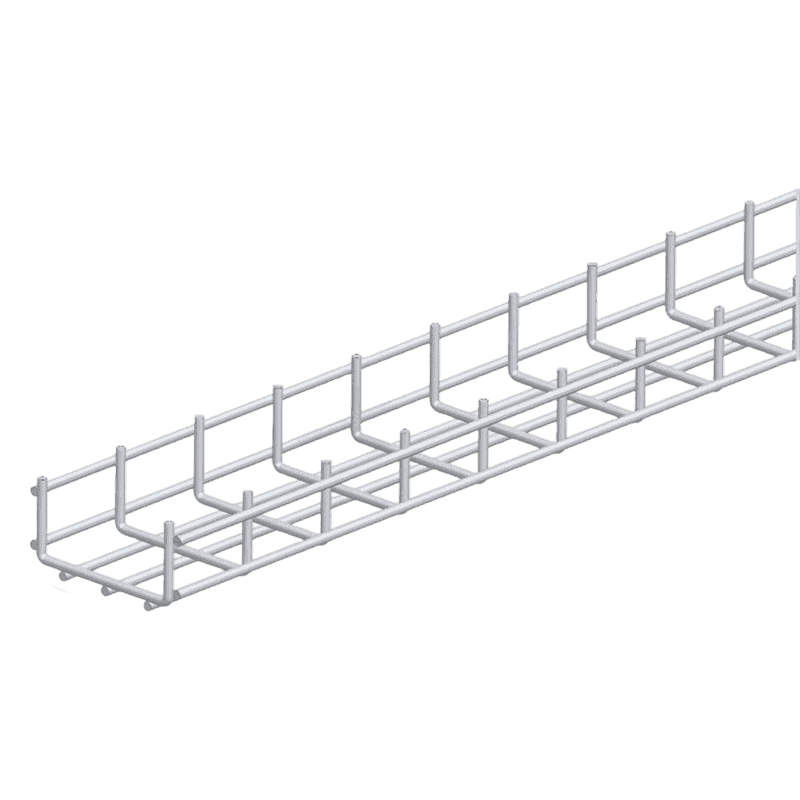 Wire mesh cable tray straightWire mesh cable tray straight adopts an open grid design. The main body of the bridge is welded by steel wire. The mesh holes are evenly distributed and the opening ra...View Product →
Perforated trays are a practical compromise where cable bundles are mixed with power feeders and dust ingress is more of a concern. The perforation pattern gives up some airflow but keeps the enclosure tidy. Cable ladders should be reserved for main feeder paths from the substation to the row of server cabinets, where heavy power cables carry their own heat and need unobstructed ventilation.
Three Numbers That Decide Data Center Tray Performance
Three numbers decide whether a tray is suitable for a data center: load rating, fill ratio, and material thickness. These three values, taken together, tell you whether the tray will sag, block airflow, or corrode in the next ten years.
Load Rating and Span
A tray rated for 150 N/m may still deflect too much if the support span is wider than 1.5 m. Data center installers often need a narrower span because the tray runs under raised floor tiles with limited access. Check the deflection under full load at the span you plan to use before signing off on the tray section.
Fill Ratio
Fill ratio is the cross-sectional area occupied by cables divided by the tray's available area. A sensible target is under 40% for data cables and under 30% for mixed power and data. Perforated trays are useful here because their open pattern gives you a predictable area for cable spacing while still holding a dense bundle in place.
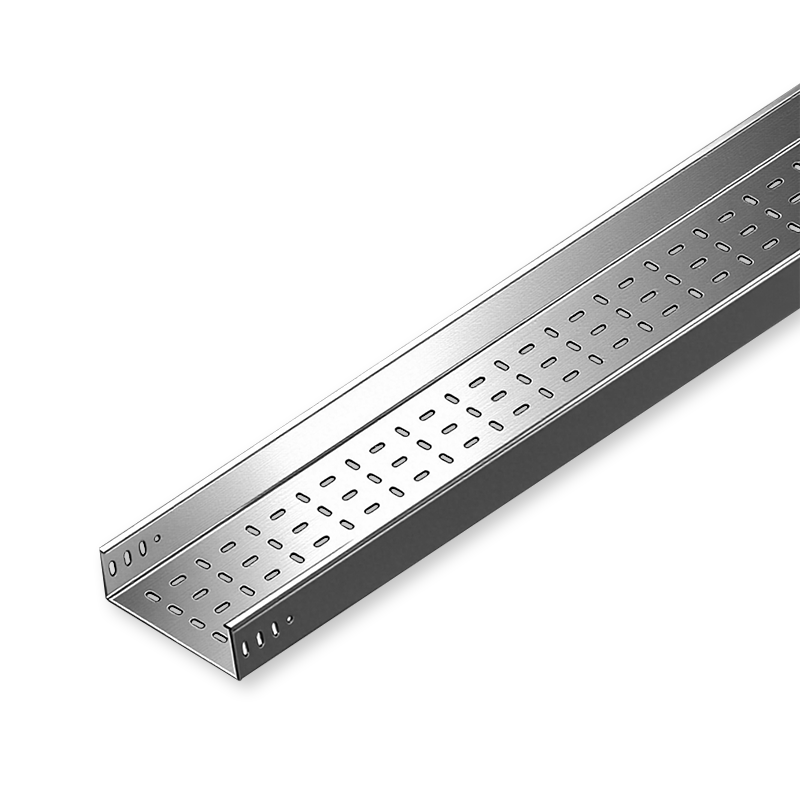 Perforated cable tray straightPerforated cable tray straight adopts a fully open perforated tray shape, and its bottom and two sides are equipped with evenly arranged heat dissipation holes to effe...View Product →
Material and Surface Finish
Hot-dip galvanized steel is the baseline for indoor data centers. Stainless steel 304 is the standard for coastal or humid facilities. Powder coating is acceptable for trays mounted above cabinets, but it scratches easily during cable pulling and should be selected only when the coating fully covers cut edges.
Installation Practices That Prevent Airflow and Accessibility Problems
Under raised floors, leave at least 20 mm between the bottom of the tray and the floor slab to let air pass. Above cabinets, keep the tray at a height that allows technicians to remove a failed cable without standing on the server.
- Minimum clearance below tray in a raised floor: 20 mm at the deepest point
- Maximum cable sag between supports: 10 mm at rated load
- Ground continuity: bond every tray section with connecting plates or welded joints
- Fiber routing: use vertical bends that respect the cable's specified bending radius
For main feeders running from the substation into the server hall, a cable ladder with 100 mm side rails gives clean support for heavy power bundles while keeping the underside open for cold air to reach the perforated floor tiles.
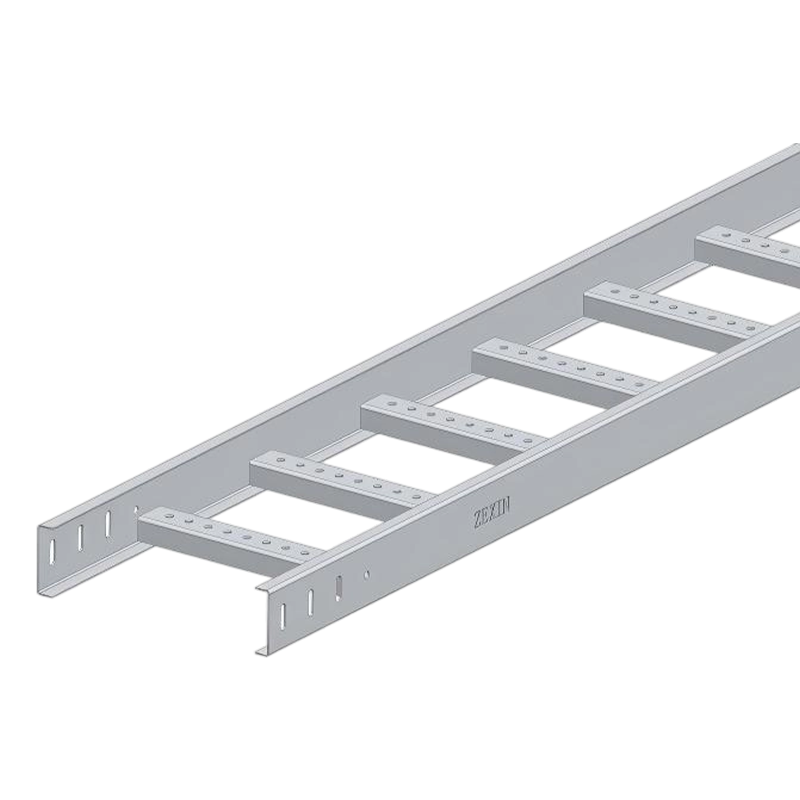 Cable ladder straightCable ladder straight adopts a ladder-type main beam structure with crossbar support. This structure is derived from the mechanical principle of traditional I-beams. T...View Product →
Align tray sections so that expansion joints fall between support points, and never route a cable tray directly above a server exhaust aisle unless the tray has sufficient vertical clearance.
What a Data Center Tray Supplier Must Deliver
Selecting the right tray type is only half of the conversation. A data center project also needs a supplier that can deliver non-standard widths, custom cutouts, and the correct surface finish in one production batch. Without that flexibility, your site team will spend days modifying standard pieces, and every modification introduces a weak point in the support system.
Project experience matters too. We have supplied trays for a data center project where the layout had to fit both the server hall and the utility corridors without restricting access. One example of that kind of work is the MY06 Phase II data center project.
Finally, look for OEM and ODM support if your project uses local contractors with specific drawings. That way the tray geometry, cutouts, and rail heights come from the factory rather than from field improvisation. The result is a faster install and fewer callbacks.
Related Products
-
-
Cable tray straight adopts a coverless U-shaped straight section design, and the overall structure is simple and practical. Its core structure is a U-shaped trough, and the edges on both sides are des...
READ MORE -
Cable ladder straight adopts a ladder-type main beam structure with crossbar support. This structure is derived from the mechanical principle of traditional I-beams. The main beam bears the weight of ...
READ MORE -
The core design of the cable ladder reducer is a trapezoidal gradual transition structure. The structure adopts a ladder-type bridge beam body, and the bottom is supported by a crossbar to ensure the ...
READ MORE
Related News
-
1.Choosing the Right Cable Trunking Type Cable trunking systems are solutions used to protect cables and ensure their sa...
READ MORE -
Introduction to Wire Mesh Cable Trays What are Wire Mesh Cable Trays? A wire mesh cable tray, also called a wire cable t...
READ MORE -
The Role of Perforated Cable Tray in Solar Power System Wiring Understanding Perforated Cable Trays and Their Functional...
READ MORE -
Cable Trunking: A Key Component in Reducing Electrical Hazards Electrical installations are an essential part of any mod...
READ MORE
Customized service
Customized service
Customized service
Customized service

Telephone consultation
The consultation form is here.
+86-182-6255-8899Working hours 8:00~17:00
-
Address
No. 67 Yongsheng Line, Yangzhong City, Jiangsu Province, China
XIN ZEXIN ELECTRIC PTE LTD
Email: sales@xinzexin.com.sg
Contact: +65 6214 6888
Address: 1 Sunview Road, #03-22 Eco-Tech@Sunview, Singapore 627615 -
E-mail
sales@zexinelectric.com
-
Friendship Link
www.zexin.com
-
Social Media Account
We welcome you to visit and inspect our company on site. Looking forward to becoming your partner.
CONTENTS
Copyright 2025 JIANGSU ZEXIN ELECTRIC TECHNOLOGY CO.,LTD. All Rights Reserved
